THE BERTHA 
ARTIVISM AWARDS

Global funding for arts activism that mobilizes communities for social change.

About Artivism

About the Bertha Artivism Awards

The Bertha Artivism Awards supports activist artists, art collectives and organizations to instigate social change.

Artivism uses the power of art as a call to action. It exposes and challenges power dynamics, and inspires resistance. Bertha Artivists receive funding for projects that politicize, empower and mobilize communities in collaboration with social justice organizations, campaigns, or movements to work towards change. 

Bertha Artivism Awards applications open once a year. Each cohort of Bertha Artivists starts in January and has up to a year to complete their work. 

What we offer

What we offer

  • Up to USD 20,000 per project
  • A minimum of 3 online convenings with the rest of the cohort during the year
  • Opportunities to connect with other Artivists

What we expect of Bertha Artivists

What we expect of Bertha Artivists

The Bertha Artivism Awards are not intended to be a full-time commitment, and we understand that Artivists may have other projects they are working on simultaneously. We do ask that Bertha Artivists commit to:

  • Attending online convenings with the rest of the cohort
  • Attending one-to-one check-ins with Bertha staff (not more than three during the year)
  • Gather footage and other multimedia content documenting their project, for use in program reporting. Artivists may use up to USD 1,000 of their award (within the maximum USD 20,000) to gather this material if necessary

Eligibility Criteria

Eligibility Criteria

Artivists:

  • May work in any country around the world
  • Must be proficient in spoken and written English
  • Will have strong connections to the community and/or issues being addressed in their work
  • Will ideally be able to demonstrate a history of social justice work (in their art or otherwise)

Artivism projects:

  • May be in any artistic medium
  • Must be completed within one year
  • Must have a clear target audience (for example a community/group affected by a specific issue)
  • Will ideally demonstrate a strong connection to communities, movements, organizations or other stakeholders relevant to the work
  • Must be accessible to the public without charge. This does not preclude accepting donations
  • Must not involve party political lobbying or strategies that use violence
Applications for the Bertha Artivism Awards
will open in August 2026.

Sign up for updates here and find out more below!

Bertha Artivism Highlights

Aluro30 (Juan Carlos Reyes Garcia)

Location: Mexico
2024 Bertha Artivist

In Guardians of Mother Language, documentary photographer, Juan Carlos Reyes Garcia blended beautiful portraiture and audio postcards to document the guardians of the mother language; members of indigenous communities in Mexico who fight to keep their languages and cultures alive.

Headshot of Juan Carlos Reyes Garcia

Angelica Dass

Location: Spain
2022 Bertha Artivist

Angelica’s project ‘Soy adolescente y qué más?’ (SAYKM ‘I am a teenager, so what else?’) was a multidisciplinary and collective project that centered adolescents as protagonists, serving as a loudspeaker to broaden their reflections and vindicate their existence with their own arguments, accepting their lights and shadows.

Headshot of Angelica Dass

Babatunde “Tribe” Akande

Location: Nigeria
2025 Bertha Artivist

Babatunde used their Bertha Artivism Award to create a safe space for LGBTQ+ and minority creatives in Lagos. Following various residencies and much collaboration, Babatunde’s Artivism project culminated in Silenced Eyes, an exhibition/event that brought together LGBTQ+ and minority artists, performers, and community members to reclaim stories and ensure that no narrative remains silenced.

Headshot of Babatunde "Tribe" Akande

Citlali Fabian

Location: Mexico
2024 Bertha Artivist

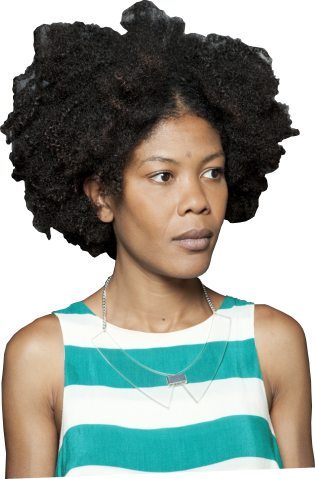
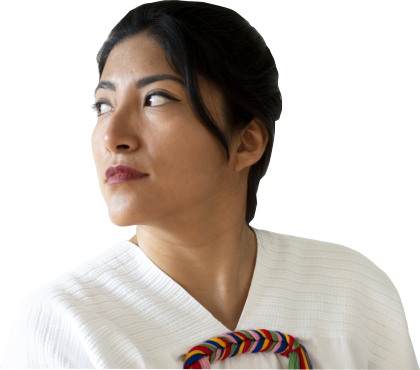
In her project ‘Birha’ (a Zapotec concept used by women to refer to other women in their lives with whom they have emotional connections) Citlali co-created a series of portraits with her birhas, to reflect and visualize the roles of contemporary Indigenous women in their communities.

Headshot of Citlali Fabian

Empatheatre

Location: South Africa
2022 Bertha Artivist

Empatheatre’s theatre-making/storytelling project aimed to create a novel democratic decision-making space for rural youth in northern KZN, South Africa through the process of restorative public storytelling.

Emphateatre Logo

Jason deCaires Taylor

Location: United Kingdom
2023 Bertha Artivist

Jason’s project Sirens of Sewage responded to the prolific pollution of the UK’s waterways and seas by profit-hungry water companies, using lifecasts of a small cross-section of the local Whitstable community, including members of SOS Whitstable.

Headshot of Jason deCaires Taylor

NKOLI: The Vogue Opera

Location: South Africa
2023 Bertha Artivist

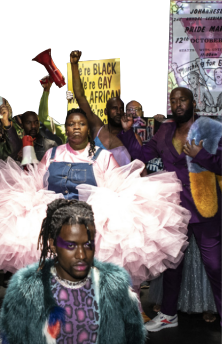
NKOLI: The Vogue Opera tells the remarkable story of Simon Nkoli, a gay anti-apartheid South African freedom fighter and HIV activist who was imprisoned for four years on charges of treason (1985-1988). The Bertha Artivism Award allowed composer Philip Miller and his team to conduct a social media campaign drawing on elements of the live vogue-opera about Simon’s life.

Meet our 2026 Artivists

Artivist Network Logo

Artivist Network

Location: Spain, Hungary, Malaysia

Bio

Chevron Down

The Artivist Network is a collective of arts activists and facilitators that works to support activists and movements in the innovation, exchange and dissemination of new forms of political intervention. Their work builds bridges between art and activism - supporting artists to be more strategic in their work while accompanying movements to more deeply engage creativity. They focus on climate justice organizing for its potential to provoke transformative, structural and intersectional change. Their dream is a global, collaborative network of artivists who can open cracks inside the dying world and reveal the beauty that is waiting to be born.

Project

Chevron Down

The Artivist Network will convene a “Performance Co-Creation Laboratory” where 12-15 artivists specialized in public performance from across the Mediterranean region will come together for 5 days of in-person skill-shares, exploration and experimentation. This unique cohort will be facilitated to learn from and with each other as they collectively experiment, innovate and execute new forms of public protest grounded in artistic practice and cultural heritage. Outcomes from this Laboratory will be further developed and workshopped in collaboration with local communities and turned into public performances that blur the boundaries of art and activism.

Headshot of Cerrucha

Cerrucha 

Location: Mexico

Bio

Chevron Down

For fifteen years, Cerrucha has explored gender-based violence and systemic oppression through participatory, politically engaged art. She creates platforms that amplify diverse voices and uses methods such as nonviolent communication and theater improvisation to build collective experiences. Her projects culminate in large-scale photographic works, archival elements and public interventions, like flash mobs choreographed to songs based on participants’ testimonies. Notable works include the Memorial for Lesvy and the Victims of Femicide and Trinchera in Mexico City. She co-founded DISIDENTA: Transfeminist Social Practices and currently directs the Mexican Women Artists Museum (MUMA).

Project

Chevron Down

The Subversion of Silence is a feminist social practice project in Mexico City that amplifies the voices of women and gender-diverse survivors of childhood sexual abuse, transforming silence into collective songs and public action. Survivors’ testimonies will be adapted into son jarocho songs and performed in three public fandangos outside key government institutions. These interventions demand accountability, challenge societal complicity and reclaim long-suppressed voices. Through joyful, communal performance, the project promotes prevention and highlights child sexual abuse as a driver of gender-based violence, becoming an act of self-justice, resistance and collective healing.

Headshot of Kirstin Harris

Kirsten Harris

Location: South Africa

Bio

Chevron Down

Kirsten Harris is an award-winning Johannesburg-based theatremaker, artivist, educator and storyteller whose work is rooted in collective process, archival memory and playful disobedience. Her creative practice explores identity, representation and social justice through rigorous research, humour and joyful resistance. She is the director and co-creator of Born Naked, a critically acclaimed queer theatrical work that has toured nationally, entered the South African school curriculum, and continues to evolve in dialogue with its audiences. Founder of Hijinks Theatre and longtime creative partner at ZikkaZimba Productions, she holds this award on behalf of the collective ecosystem that continues to shape her work.

Project

Chevron Down

In 2026, Kirsten will lead Scene Nine x Archiving the Mirror, an artivism project imagined in collaboration with Lethabo Bereng and Sihle Shona Mnqwazana, celebrating the ninth year of Born Naked in performance. The work will deepen its national impact through performance, post-show dialogue, collective art-making and strategic archival practice. Centering a collaborative ecosystem, the project uses storytelling as joyful resistance to celebrate identity, create space for hope, care, visibility and a deeper understanding of shared humanity, supported by intentional and measurable practices. Born Naked is a living, evolving practice of playful resistance that continues to resonate across educational and creative spaces.

Headshot of Ofekua de Pablo

Ofelia de Pablo

Location: Spain

Bio

Chevron Down

Ofelia de Pablo is an award-winning Spanish visual artist, documentary filmmaker and journalist, whose work merges investigative storytelling with participatory art to defend human rights, gender equality and environmental justice. As co-founder of Hakawatifilm multimedia social-impact studio, she creates educational transmedia narratives that amplify marginalized voices and have reached over 85 million global impacts. Her projects, published by The Guardian, National Geographic and Channel 4 News, serve as tools for social change. Exhibited in more than 120 festivals and cultural institutions, her practice empowers communities and young people to engage with the world through creativity and collective action.

Project

Chevron Down

Ofelia’s project - Goals for Hope - is a participatory and collective art project with the Dragonas de Lavapiés, a group of migrant mothers in Madrid who came together to form a football team as a way of “holding on to life.” The Dragonas will create their own images, portraits and stories, exploring their lives, identities and experiences. Through photography, film and writing, a collective narrative emerges where they are the protagonists, reclaiming their voices and challenging stereotypes, racism and discrimination. Their work will be presented in a free public exhibition in Lavapiés and will contribute to a larger initiative, including an interactive narrative map and a national tour, fostering lasting empowerment and visibility for their community.

Headshot of Rizky Rahad

Rizky Rahad

Location: Indonesia

Bio

Chevron Down

Rizky Rahad (he/him) is an Indonesian filmmaker, programmer and researcher whose work explores radical queer aesthetics as a means to escape regimes of control and cultivate new forms of living otherwise. Currently co-running cinema collective QAMERAD in Bali, Rizky's latest film H-O-R chronicles survivors of anti-trans violence escaping state surveillance to re-stage their image, while his latest book QUEERS SHOOT BACK! imagines a liberatory queer cinema beyond the limits of neoliberal visibility politics. Rizky was selected for the 2025 Flaherty Fellowship, 2024 British Council's Connection through Culture Grant, 2021 Chevening Scholarship and 2019 Berlinale Talents; his work has been screened at VICE, Royal Anthropological Institute Film Festival, Queer East and Fringe! Film and Arts Fest.

Project

Chevron Down

Rizky will expand his collective QAMERAD into a mobile queer cinema commons in Bali, Indonesia. He and other QAMERAD members will organize a series of guerrilla screening cycles, develop DIY screening toolkits and facilitate workshops that transfer curatorial, technical and organizational resources to the local community. Treating screening as an act of political assembly, the project will prioritise safety, accessibility and collective authorship. Alongside in-person gatherings, the team will also build a digital resource archive to share ethos, methods, reflections and tools with other organizers regionally and trans-locally, ensuring the project’s impact extends beyond the award year.

Headshot of Sarah Stirk

Sarah Stirk

Location: United Kingdom

Bio

Chevron Down

Sarah Stirk is a London based multimedia artist, investigator and photographer. Her work focuses on environmental issues worldwide. She is co-founder/creative director of Wildlight, a women-led global non-profit freelancers cooperative delivering investigations and creative projects for NGOs and the media through fieldwork, data analysis and storytelling. Her artwork includes ‘Airborne’, an installation focusing on the impact of air pollution on the health of children in London, linking to the wider climate emergency.

Project

Chevron Down

Following on from Airborne, Waterborne is the second in a four part artwork exposing hidden pollutants in the environment.

Through creative investigation and community collaboration in London and on the south coast, Waterborne makes the invisible threat of water pollution visible at the intersection of art, science and activism. The project will take the form of a multimedia installation of stills, video and sound. 

Demystifying the opaque pollutants that hide in the depths of our blue spaces, contaminating our riverine and coastal landscapes, bodies and minds, exposes the intangible and motivates action.

Unchained Vibes Africa Logo

Unchained Vibes Africa

Location: Nigeria

Bio

Chevron Down

Unchained Vibes Africa (UVA) is an arts organization based in Nigeria. UVA mobilizes artists, young people and communities to use creativity, including satire, music and theatre as a tool for non-violent social change. The organization has a proven track record of having delivered nine Freedom Vibes concerts, over 50 advocacy campaigns and supporting legalinterventions and policy dialogues. UVA is committed to advancing artistic freedom, socialjustice and inclusion across Nigeria and the African continent.

Project

Chevron Down

Unchained Vibes Africa will implement Freedom Vibes on the Move, a nationwide artivism campaign to confront growing censorship and empower communities in Nigeria. The project will combine creative productions with policy advocacy and community mobilization. Key activities include producing ten satirical skits in major Nigerian languages, hosting four regional dialogue events, staging pop-up theatre experiences and organizing the flagship hybrid Freedom Vibes 10.0 concert. The project aims to document censorship cases and support legal interventions to reform censorship laws.

Frequently Asked Questions

Can I apply if I’ve previously received funding from Bertha Foundation?

Previous recipients of the Bertha Artivism Award may apply three years after the end of their original Award. Recipients of other Bertha Foundation funding are welcome to apply.

We are a collective/organisation but are not legally registered. Can we apply?

Yes! We suggest that you identify a Fiscal Sponsor, who will countersign the grant agreement with you and receive the Award funds on your behalf.

Can Bertha Foundation recommend a fiscal sponsor?

No. 

When can I apply for a Bertha Artivism Award?

Applications open once per year, usually around August. Sign up to our newsletter to receive updates on the program.

What is the maximum funding available?

USD 20,000. Applicants may include up to USD 1,000 for program reporting within this amount.

What if my project budget is more than USD 20,000?

Please include details of which part of the project will be supported by the Bertha Artivism awards, and how the remaining budget will be funded in your application.

I’m an individual artist. What are the tax implications of receiving a Bertha Artivism Award?

We are unable to provide advice on tax matters and suggest you seek independent advice if you are concerned. Note that Bertha Foundation is registered in Switzerland and payments will originate there. Alternatively, you may wish to find a fiscal sponsor to receive the funds on your behalf.

What are the reporting requirements?

Reporting for the Bertha Artivism Awards is multimedia based, in the form of short films about the projects. Bertha Artivists are expected to provide visual materials (photos, videos etc) for the films and self-record an interview and may request up to USD 1,000 (within the maximum USD 20,000) to produce this. Bertha Artivists do not have to produce the films themselves. Further guidance will be provided to successful Artivists.

What does the program reporting funding cover?

You may request up to USD 1,000 (within the USD 20,000 maximum) to pay for the cost of producing the visual material for the reporting films. This may not be necessary if you have the skills and equipment to do it yourself but may be requested should you need additional support to capture content.